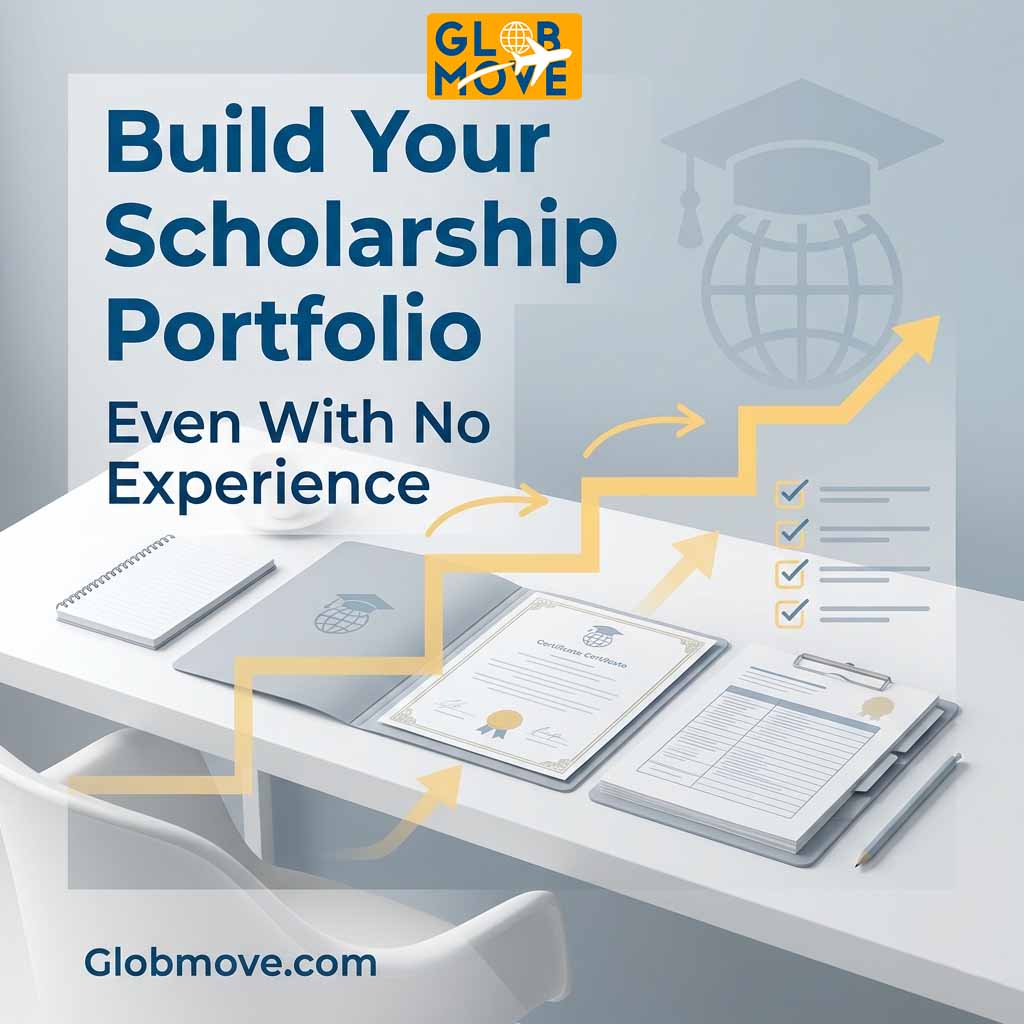
How to Build a Scholarship Portfolio (With No Experience)
One of the biggest myths in international education is that you need an impressive resume filled with internships, awards, and research experience to win scholarships. In reality, many successful applicants start with little to no formal experience—but they know how to present what they have strategically.
A scholarship portfolio is not just a collection of achievements. It’s a structured representation of your potential, initiative, and direction. If built correctly, even a beginner can compete with high-achieving candidates.
This guide walks you through exactly how to build a strong scholarship portfolio from scratch— even if you feel like you have “nothing.”
What Is a Scholarship Portfolio?
A scholarship portfolio is a curated set of documents and evidence that demonstrates:
- Your academic ability
- Leadership and initiative
- Personal values and goals
- Potential for impact
It typically includes:
- CV or Resume
- Motivation Letter / Personal Statement
- Academic transcripts
- Certificates (if any)
- Projects or proof of work
- Recommendation letters
The key is not quantity—but how well everything connects into a clear story.
Step 1: Shift Your Mindset (You Have More Than You Think)
Most applicants underestimate their experiences because they think only formal jobs or big achievements matter.
But scholarship committees evaluate:
- Initiative
- Problem-solving ability
- Consistency
- Growth mindset
Even simple experiences count, such as:
- Helping organize a school event
- Volunteering informally
- Online courses
- Personal projects
- Community involvement
The goal is to reframe your experiences as evidence of potential.
Step 2: Start With a Strong CV (Even as a Beginner)
Your CV is the backbone of your portfolio.
If you don’t have formal experience, include:
✔ Education Section
- Your school or university
- Relevant coursework
- Academic achievements (if any)
✔ Skills Section
- Digital skills (Excel, Canva, coding basics, etc.)
- Language skills
- Communication or teamwork
✔ Projects Section (VERY IMPORTANT)
This is where beginners win.
Include:
- Personal projects (blog, small research, designs, etc.)
- Group assignments
- Online course projects
Example:
- “Conducted a personal research project on climate change awareness in my community”
- “Created a digital marketing plan as part of an online certification”
Projects show initiative, which is more valuable than passive experience.
Step 3: Build Experience Without “Experience”
If you truly feel you have nothing, create your own opportunities.
1. Take Free Online Courses
Platforms like Coursera, edX, and Future Learn offer certificates.
Focus on:
- Your intended field
- Transferable skills (communication, leadership, data analysis)
2. Start a Micro Project
Examples:
- Write articles or blog posts
- Conduct a simple survey or research
- Create a portfolio (design, coding, writing)
- Launch a small community initiative
Even a 2-week project can become a strong portfolio piece.
3. Volunteer Strategically
Instead of random volunteering, choose roles that:
- Show leadership
- Align with your field
- Solve a real problem
Example:
- Teaching younger students
- Organizing a community cleanup
- Assisting NGOs remotely
Step 4: Craft a Powerful Motivation Story
Your portfolio must tell a clear, compelling story.
Answer these questions:
- What problem do you care about?
- Why did you choose your field?
- What steps have you taken so far?
- What impact do you want to make?
Even with limited experience, clarity of purpose can outperform a long CV.
Many scholarship winners succeed because they are focused—not just accomplished.
Step 5: Collect Proof and Evidence
A strong portfolio includes evidence, not just claims.
Examples:
- Certificates from courses
- Screenshots of projects
- Links to work (GitHub, blog, portfolio site)
- Photos of activities or events
- Recommendation letters
If you say you did something, show proof.
Step 6: Get Strong Recommendation Letters (Even as a Beginner)
You don’t need famous professors.
You can ask:
- Teachers
- Supervisors from volunteer work
- Mentors
Provide them with:
- Your CV
- Your goals
- Key points you want highlighted
A personalized recommendation is more powerful than a generic one.
Step 7: Organize Your Portfolio Professionally
Structure matters.
You can organize your portfolio as:
Option 1: PDF Portfolio
Combine:
- CV
- Certificates
- Project summaries
Option 2: Google Drive Folder
Create folders for:
- CV
- Certificates
- Projects
- Letters
Option 3: Personal Website (Advanced)
- Use platforms like Wix or Notion
- Showcase your work professionally
Step 8: Align Everything With the Scholarship
This is where most applicants fail.
Do NOT send the same portfolio everywhere.
Instead:
- Highlight relevant experiences
- Adjust your CV and motivation letter
- Emphasize alignment with the scholarship goals
Example:
- Leadership-focused scholarship → highlight leadership
- Research scholarship → highlight academic work
Common Mistakes to Avoid
- Waiting to gain experience instead of creating it
- Submitting generic applications
- Ignoring small but valuable experiences
- Focusing only on GPA
- Not providing proof of achievements
What Scholarship Committees Actually Look For
Contrary to popular belief, they don’t just want “perfect” students.
They look for:
- Potential
- Initiative
- Clarity of goals
- Impact mindset
- Consistency
A candidate with direction often beats one with random achievements.
Realistic Example (Beginner Portfolio)
A strong beginner portfolio could include:
- CV with education + skills + 2–3 projects
- 2 online course certificates
- 1 volunteer experience
- A clear motivation letter
- 1–2 recommendation letters
That’s enough to compete.
Final Thoughts
Building a scholarship portfolio without experience is not about faking achievements—it’s about strategically creating and presenting value.
If you focus on:
- Initiative
- Clear goals
- Evidence of effort
- Alignment with opportunities
You can compete with candidates who appear more experienced on paper.
Remember:
Scholarships are not awarded to the most experienced—they are awarded to those who show the strongest potential for future impact.
see also: