

Estonia’s Logistics, Operations, and Business Support Roles: A Low-Competition EU Work Visa Path for Non-EU Graduates
Estonia is rarely mentioned when discussing working in Europe. This is not because opportunities are lacking, but because Estonia does not market itself aggressively to international job seekers. As a result, competition remains far lower than in Western Europe, offering non-EU graduates a quieter, more accessible path into the EU labour market.
Estonia is a small EU member state with a highly digitalized government, an open attitude toward foreign professionals, and a labour market increasingly dependent on international talent. Unlike larger countries, where hiring non-EU workers can be bureaucratically heavy or culturally hesitant, Estonia has normalized foreign recruitment in several sectors, including logistics, operations, and business support.
For graduates with backgrounds in management, business operations, and supply chain-related fields, Estonia represents a legitimate and practical EU work entry point
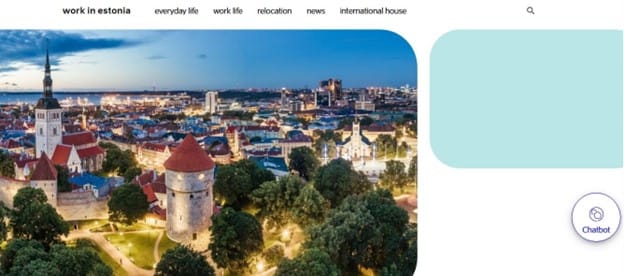
How Estonia’s Work Visa System Actually Works
Estonia operates a temporary residence permit for employment, allowing employers to hire non-EU nationals when local labour supply is insufficient.
Key Characteristics of the Estonian System
- The application process is centralized and largely digital
- Employers are familiar with hiring foreign nationals
- English is widely accepted as a working language
- Residence permits are tied to a specific employer and role
Estonia does not rely on marketing terms like “visa sponsorship.” Once an employer selects a candidate, the residence permit becomes a standard legal procedure, not an exception or bureaucratic obstacle.
Why Logistics and Operations Roles Are in Demand in Estonia
Estonia’s economy is deeply connected to regional trade, logistics corridors, and digital services supporting supply chains and operations.
Several structural factors drive demand for non-EU professionals:
- Small population: Local graduates alone cannot fill all operational and coordination roles, especially as companies scale.
- International operations: Many Estonian companies operate abroad, creating constant demand for English-speaking staff capable of managing documentation, coordination, reporting, and communication.
- Moderate turnover: Logistics and operations roles are functional, requiring continuity, accuracy, and organization rather than deep specialization.
Together, these factors ensure consistent demand for junior and entry-level professionals, making Estonia a low-competition but realistic EU entry point.
Roles That Are Realistic for Non-EU Business Graduates
This pathway is not about senior logistics managers or highly technical roles. It focuses on support and coordination positions essential for daily operations.
Common job titles include:
- Logistics Coordinator
- Supply Chain Assistant
- Operations Support Specialist
- Business Operations Assistant
- Procurement or Planning Assistant These roles typically involve:
- Coordinating shipments or workflows
- Maintaining operational records
- Communicating with internal teams and external partners
- Supporting planning and reporting processes
For management and business graduates, these positions align closely with skills in organization, process thinking, and applied problem-solving, offering practical work experience in real-world settings.
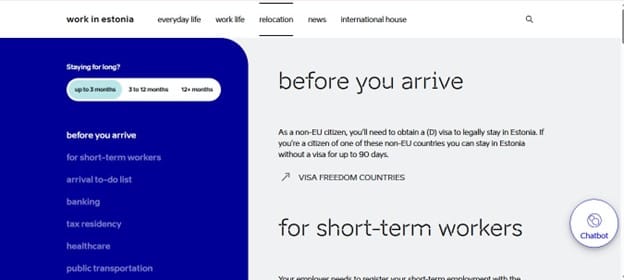
Why This Fits a Management or Business Background
Estonian employers highly value candidates with general management skills in operations-focused environments.
Key employer expectations include:
- Understanding processes rather than just completing tasks
- Following structured workflows consistently
- Communicating clearly and professionally in English
- Adapting to digital systems and tools
Advanced technical expertise, mathematics, or coding skills are rarely required at the entry level. What matters more is reliability, clarity, and the ability to keep systems running smoothly.
This makes Estonia particularly suitable for graduates who prefer applied, structured work over abstract theory, offering an immediate way to demonstrate value in a professional environment.
Employer Attitudes Toward Non-EU Candidates in Estonia One of Estonia’s advantages is employer mindset.
Because Estonia is small and outward-looking, companies are:
- Used to multicultural teams
- Less rigid about nationality
- Focused on skills, availability, and reliability
For many employers, hiring a non-EU candidate is a normal response to labour needs, not a last resort. Once a candidate is selected, employers typically handle the residence permit process efficiently, making hiring relatively straightforward.
Where These Opportunities Are Found Legitimately
Legitimate opportunities are usually advertised through:
- Estonian company career pages – direct applications often yield the best results
- EU-wide job portals that include Estonia, such as EURES
- Recruitment firms operating in the Baltic region
- Professional platforms like LinkedIn, where English-language roles are clearly specified
Candidates should be cautious of intermediaries asking for placement fees or guaranteeing visas. In Estonia, all legitimate hiring occurs through the employer and official migration system, ensuring legal security for both parties.
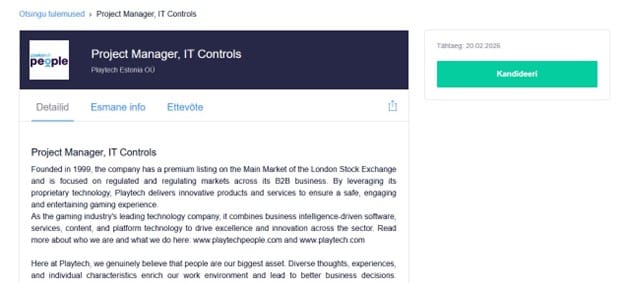
How to Present Yourself Strategically
When applying for Estonian roles, clarity matters more than persuasion.
Focus on:
- Understanding the role and responsibilities
- Your ability to support operations and processes
- Readiness to work in an international environment
A professional way to address immigration is to state that you are eligible to apply for an Estonian residence permit for employment if selected. This signals awareness and preparedness without creating concern or appearing dependent.
Common Mistakes Applicants Make
Many international candidates fail because they:
- Apply to roles that are too senior
- Use generic CVs without operational focus
- Overemphasize relocation instead of contribution
Estonian employers respond better to candidates who are grounded, role-focused, and ready to integrate into existing systems.
Long-Term Perspective: Is Estonia a Stepping Stone or a Destination?
For some professionals, Estonia becomes a long-term base. For others, it serves as a first EU work experience that opens doors elsewhere in Europe.
Experience gained in:
- EU-based logistics
- Cross-border operations
- English-speaking professional environments
…is highly transferable across the EU. This makes Estonia not only accessible, but also strategically valuable for career progression.
Final Assessment
Estonia’s logistics, operations, and business support roles represent one of the lowestcompetition, most legitimate work visa pathways for non-EU graduates in the EU.
This pathway is especially suitable if you:
- Hold a business or management degree
- Prefer applied, structured work
- Are open to starting in a smaller EU economy
- Value long-term EU experience over brand prestige
It is not a shortcut, but it is real, legal, and repeatable, providing a foundation for growth within Europe.