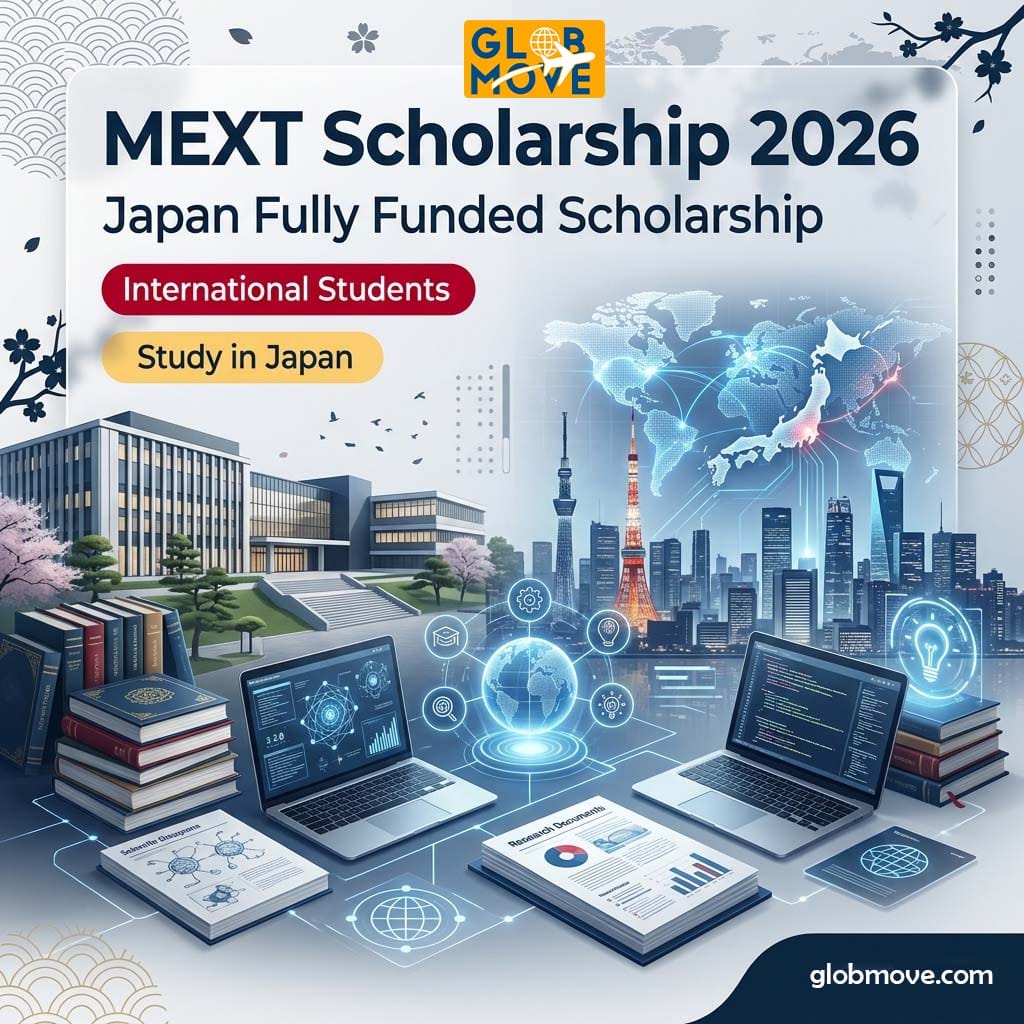
MEXT Scholarship 2026 in Japan for International Students (Fully Funded)
Japan has become one of the most searched study destinations for international students in recent years, especially among applicants looking for fully funded government scholarships that combine high-quality education, advanced technology, research opportunities, and long-term international exposure.
Among those opportunities, the MEXT Scholarship 2026 remains one of the most important and competitive programs globally.
For students searching:
- fully funded scholarships in Japan 2026
- Japanese government scholarship
- MEXT undergraduate scholarship
- MEXT master’s scholarship
- study in Japan without IELTS
- scholarships for international students in Japan the MEXT Scholarship consistently ranks among the top opportunities.
But despite its popularity, many applicants misunderstand how the scholarship actually works.
A surprising number of students think MEXT selection is based mainly on grades alone. In reality, successful applicants often stand out because they combine:
- academic readiness
- realistic study plans
- research clarity
- cultural adaptability
- communication ability
- strong long-term direction
That is why some high-GPA applicants still fail while applicants with more balanced but well structured profiles succeed. Understanding that difference can significantly improve an applicant’s chances.
What Is the MEXT Scholarship?
The MEXT Scholarship is funded by Japan’s Ministry of Education, Culture, Sports, Science and Technology.
The program supports international students who want to pursue:
- undergraduate studies
- master’s degrees
- PhD programs
- research programs
- specialized training at Japanese universities.
The scholarship is highly respected because it combines:
- full financial support
- government sponsorship
- internationally recognized universities
- advanced research infrastructure
- global academic reputation
Japan’s growing internationalization efforts have also made many universities more accessible to international students through English-taught programs.
Why MEXT Gets Massive Global Search Traffic
The scholarship attracts huge international interest because it combines several highly searched advantages:
- fully funded study abroad
- Japan government funding
- monthly stipend
- tuition coverage
- international student support
- no application fee in many cases
- possible pathways without IELTS at some institutions
Japan itself also attracts students because of:
- technological leadership
- strong engineering and science reputation
- safety
- structured academic culture
- global research opportunities
Students interested in broader Asian opportunities may also find this relevant:
Asian future leaders scholarship program in Japan
Scholarship Benefits
The MEXT Scholarship typically includes:
- Full tuition coverage
- Monthly stipend
- Round-trip airfare
- Preparatory Japanese language training in some cases
- Access to university facilities and research environments
Funding levels can vary slightly depending on:
- degree level
- study category
- location
But overall, the scholarship remains one of the strongest fully funded government programs available globally.
Still, applicants should avoid one common mistake:
choosing Japan only because of funding.
Strong applicants usually show genuine alignment with:
- academic goals
- research interests
- long-term plans
- educational fit rather than simply chasing a fully funded opportunity.
Two Main Application Routes
One of the most misunderstood aspects of MEXT is that there are usually two major pathways:
- Embassy Recommendation
- University Recommendation
Applicants often confuse these systems completely.
Understanding the difference is extremely important.
Embassy Recommendation Route
This is the route most applicants know.
Students apply through the Japanese embassy or consulate in their home country.
The process may involve:
- document screening
- written examinations interviews
- preliminary selection
Embassy recommendation is highly competitive because it attracts huge applicant numbers.
However, it can provide access to a broader range of universities later in the process.
University Recommendation Route
Some universities directly nominate students to MEXT.
This route is often less discussed but strategically important.
In many cases:
- applicants contact professors
- apply directly to universities
- secure departmental support before nomination occurs.
This pathway can sometimes favor applicants with:
- strong research alignment
- focused academic goals
- communication with faculty members especially at postgraduate level.
Eligibility Requirements
Requirements vary depending on the scholarship category, but common criteria include:
- citizenship from eligible countries
- academic qualifications relevant to the program
- age requirements depending on category
- strong academic performance
- health requirements
Language requirements vary significantly.
Some English-taught programs may accept:
- IELTS
- TOEFL
- alternative English proof
while some programs prioritize Japanese proficiency.
Applicants should never assume all MEXT pathways work the same way.
Why Research Planning Matters So Much
This is where many postgraduate applicants fail.
A lot of students write research proposals that sound:
- broad
- unrealistic
- copied
- academically vague Committees often notice this quickly.
Strong research plans usually:
- identify a specific issue
- explain why it matters
- connect clearly to previous studies
- show realistic methodology
- align with Japanese academic strengths
One major mistake is trying to sound overly revolutionary instead of intellectually focused.
A clear and realistic proposal is usually stronger than dramatic language.
The Hidden Role of Cultural Adaptability
This is something many applicants underestimate.
MEXT committees are not only evaluating academic readiness.
They are also indirectly assessing whether applicants can adapt successfully to:
- Japanese academic systems
- communication styles
- cultural expectations
- long-term international study environments
Applicants who demonstrate:
- flexibility
- curiosity
- maturity
- openness to learning often create stronger impressions.
Application Process (Detailed Breakdown)
The MEXT process can feel complicated initially, especially for first-time applicants.
Understanding the stages early helps avoid major mistakes.
Step 1 – Choose the Scholarship Category
Applicants must first identify whether they are applying for:
- undergraduate
- master’s
- doctoral
- research student
- specialized training
Different categories involve different requirements and timelines.
Step 2 – Prepare Documents Carefully
Typical documents include:
- academic transcripts
- degree certificates
- recommendation letters
- research proposals (for postgraduate applicants)
- medical forms
- language certificates if required
One common reason for rejection is poor document preparation.
Applicants often underestimate:
- formatting requirements
- translation rules
- incomplete information
- inconsistent academic details
These issues matter more than students expect.
Step 3 – Embassy or University Submission
Applicants submit through:
- Japanese embassies or
- university systems depending on route
At embassy stage, applicants may face:
- written tests
- interviews
- academic screening
Some countries have extremely competitive embassy quotas.
Step 4 – University Placement
Successful candidates may then communicate with Japanese universities and supervisors.
This stage can become technical.
Applicants often need:
- acceptance letters
- professor communication
- departmental approval before final placement confirmation.
Common Mistakes Applicants Make Writing Generic Study Plans
A lot of applicants submit proposals that could apply to almost any country or university.
That weakens the application immediately.
Strong applicants explain:
- why Japan specifically matters
- why the program fits
- why their research direction is relevant
Applying Without Understanding the System
Many students do not understand:
- embassy timelines
- university recommendation differences
- professor communication expectations
This confusion creates avoidable mistakes.
Ignoring Interview Preparation
Even academically strong students sometimes fail interviews because they:
- sound uncertain
- cannot explain their goals clearly
- appear underprepared
This connects strongly to a broader issue many scholarship applicants face:
Why good students fail scholarship interview
Chasing Prestige Without Fit
Some applicants focus only on famous universities instead of:
- academic alignment
- supervisor compatibility
- realistic preparation
This often weakens research coherence.
What Makes Applicants Stand Out?
Strong MEXT applicants usually:
- communicate clearly
- explain academic goals realistically
- show intellectual maturity
- demonstrate preparation
- understand why Japan fits their path
Specificity matters enormously. Applicants who clearly explain:
- what they want to study
- why it matters
- why Japan supports that direction often build much stronger applications.
Why Japan Is Becoming More Attractive Internationally
Japan’s global education strategy has expanded significantly in recent years.
International students increasingly view Japan as attractive because of:
- research investment
- technology leadership
- innovation culture
- graduate employability
- scholarship accessibility
Many students also appreciate Japan’s combination of:
- modern infrastructure
- safety
- academic seriousness
- international networking opportunities
For students comparing broader scholarship destinations in Asia, this may also help:
NUS young fellowship programme singapore fully funded
Finally
The MEXT Scholarship 2026 remains one of the world’s most respected fully funded government scholarships for international students.
But success requires much more than high grades alone.
The strongest applicants usually combine:
- academic preparation
- realistic study goals
- strong communication
- thoughtful planning
- genuine alignment with their chosen field
As competition for global scholarships continues increasing, applicants who understand the strategic side of scholarship applications will likely hold a major advantage.
Students interested in additional fully funded opportunities may also explore: