
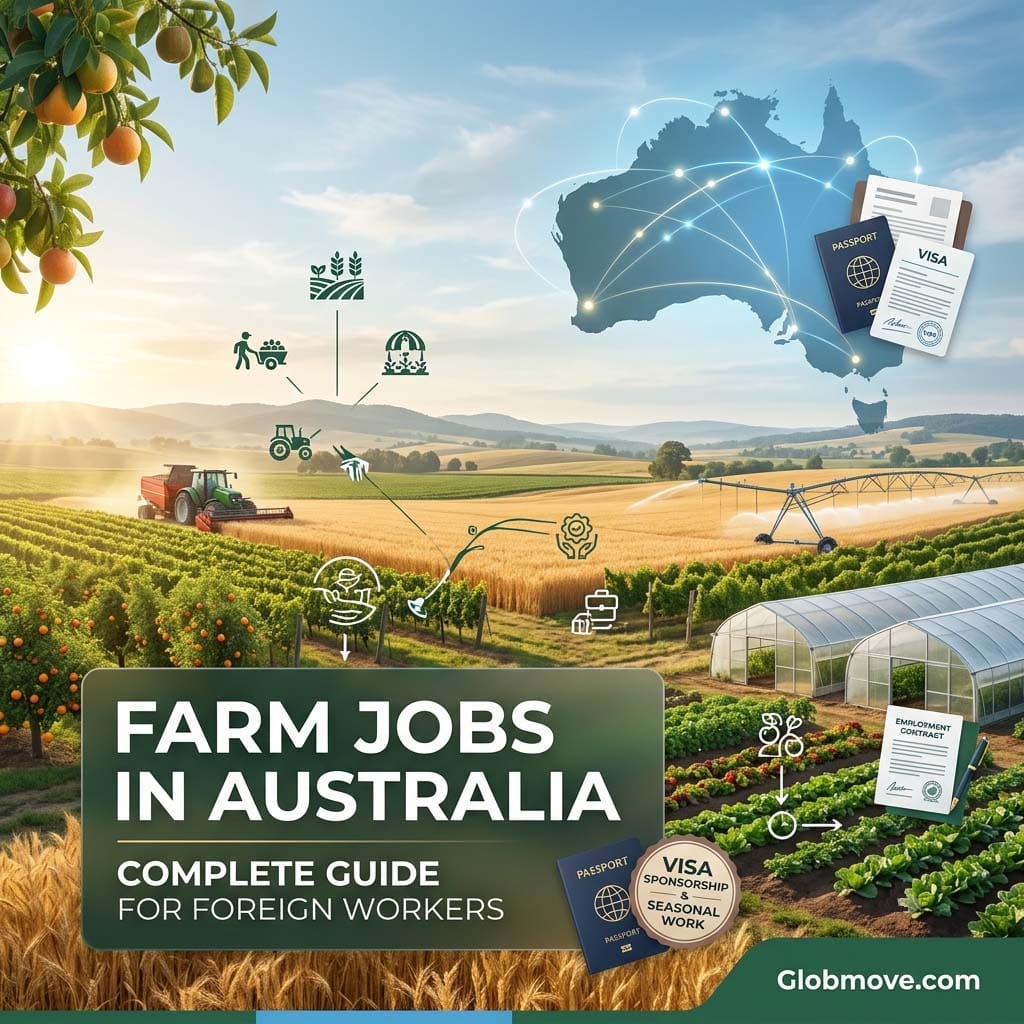
Complete Guide for Foreign Workers looking for farm jobs in Australia
For thousands of people around the world, Australia represents more than just a travel destination—it is a place where they can build a better future through legal employment. Among the many industries hiring international workers, agriculture continues to stand out as one of the largest employers of overseas labour.
Australian farms produce everything from grapes and apples to dairy products, wheat, beef, cotton, and vegetables. Because these industries depend heavily on seasonal and year-round workers, employers often struggle to recruit enough local staff. This ongoing shortage creates opportunities for qualified foreign workers, including those without previous farming experience.
One of the most searched topics online this year is “Australia visa sponsorship jobs 2026.” Many people specifically want farm jobs because they are often easier to enter than highly skilled professions. While not every employer offers visa sponsorship, many legitimate businesses recruit international workers through approved government programs and employer-sponsored visa pathways.
This guide explains everything you need to know—from the types of jobs available and salary expectations to visa options, application tips, and how to avoid scams.
Why Australia Is Hiring More Farm Workers in 2026
Agriculture contributes billions of dollars to Australia’s economy every year. However, many farms are located in regional and remote areas where employers struggle to attract enough workers.
Several factors continue to drive labor shortages:
- An ageing rural workforce
- Seasonal harvest peaks
- Expansion of agricultural exports
- Growth in fruit, dairy, and livestock production
- Increased demand for food worldwide
As a result, many employers actively recruit workers from overseas when they cannot fill positions locally.
This has created opportunities for international applicants who are physically fit, willing to relocate, and interested in agricultural work.
What Does “Visa Sponsorship” Actually Mean?
Many people misunderstand the term “visa sponsorship.”
It does not mean that every employer pays all your travel costs or automatically guarantees a visa.
Instead, sponsorship generally means an approved Australian employer supports your application under an eligible work visa when they cannot find suitable local workers.
Depending on the employer and visa type, sponsorship may include:
- Employment contract
- Assistance with immigration paperwork
- Labor agreement sponsorship
- Relocation support
- Accommodation assistance
- Airport pickup
- Training after arrival
Always read the job description carefully to understand exactly what is included.
Types of Farm Jobs Available
Australia’s farming industry is much broader than fruit picking. Many different positions are available throughout the year.
1. Fruit Picking Jobs
Fruit picking remains the most common entry-level farm job.
Typical crops include:
- Apples
- Oranges
- Mangoes
- Bananas
- Blueberries
- Strawberries
- Cherries
- Citrus fruits
- Pears
- Avocados
Most jobs involve harvesting, sorting, packing, and preparing produce for export.
Experience is often unnecessary because employers provide basic training.
2. Vegetable Farm Workers
Vegetable farms recruit workers for:
- Planting
- Harvesting
- Packaging
- Cleaning produce
- Quality inspection
- Greenhouse maintenance
Large commercial farms often hire throughout the year.
3. Dairy Farm Assistants
Dairy farming offers more stable employment than seasonal harvesting.
Typical responsibilities include:
- Milking cows
- Feeding livestock
- Cleaning dairy facilities
- Monitoring animal health
- Maintaining equipment
Many dairy farms offer accommodation because they are located in rural communities.
4. Livestock Farm Jobs
Australia has one of the world’s largest cattle industries.
Employers recruit workers for:
- Feeding animals
- Fence repairs
- Mustering cattle
- Property maintenance
- Water system maintenance
- Livestock handling
These positions often include housing on the farm.
5. Vineyard Jobs
Australia’s wine industry regularly recruits seasonal workers.
Common tasks include:
- Pruning vines
- Harvesting grapes
- Irrigation
- Packing
- Vineyard maintenance
Wine regions such as South Australia and Victoria recruit thousands of seasonal workers every year.
6. Poultry Farms
Poultry companies employ workers to:
- Feed birds
- Monitor health
- Collect eggs
- Clean facilities
- Package products
Many positions operate year-round.
7. Grain and Crop Farms
Large wheat and grain farms require workers during planting and harvesting seasons.
Jobs include:
- Operating machinery
- Driving tractors
- Irrigation
- Storage management
- Equipment cleaning
Experienced machinery operators generally earn higher salaries.
Australian States with the Most Farm Jobs
Some regions consistently recruit more workers than others.
Queensland Known for:
- Mangoes
- Bananas
- Sugar cane Avocados
- Vegetables
Queensland offers one of the largest numbers of seasonal agricultural jobs.
Victoria
Popular industries include:
- Dairy
- Grapes
- Apples
- Berries
- Vegetables
New South Wales
Employers recruit for:
- Citrus
- Cotton
- Livestock
- Grain farming
South Australia Home to:
- Vineyards
- Wine production
- Grain
- Livestock
Western Australia
Opportunities include:
- Wheat farming
- Sheep stations
- Cattle properties
- Large commercial farms
Average Salaries in 2026
Farm wages vary depending on the employer, location, and job type.
Position | Estimated Salary |
Fruit Picker | AUD 28–35/hour |
Farm Hand | AUD 30–40/hour |
Dairy Assistant | AUD 60,000–75,000/year |
Livestock Worker | AUD 60,000–80,000/year |
Poultry Worker | AUD 55,000–70,000/year |
Tractor Operator | AUD 70,000–90,000/year |
Farm Supervisor | AUD 80,000–110,000/year |
Workers who take overtime and weekend shifts can often earn significantly more.
Who Can Apply?
Many entry-level jobs require only:
- A valid passport
- Good physical fitness
- Basic English communication
- Ability to work outdoors
- Willingness to relocate
- Positive work attitude
Previous farm experience is often preferred but not essential.
Visa Options Available
Several visa pathways may allow eligible foreign workers to work on Australian farms, depending on their nationality, employer, and occupation.
Common pathways include:
- Employer-sponsored visas
- Labor Agreement streams
- Pacific Australia Labor Mobility (PALM) Scheme (for eligible countries)
- Working Holiday visas (for eligible nationalities)
- Seasonal employment arrangements where applicable
The right option depends on your individual circumstances and the employer’s recruitment program.
A useful related guide for readers exploring sponsorship opportunities is:
Australia Visa Sponsorship Jobs for International Workers 2026 (Apply as Skilled & Unskilled Workers)
How to Apply Successfully
Instead of sending the same CV to hundreds of employers, take a more targeted approach:
Step 1: Prepare an Australian-style CV highlighting physical work, reliability, teamwork, and any agricultural or outdoor experience.
Step 2: Write a short cover letter explaining why you want to work in Australia’s farming sector and your willingness to relocate.
Step 3: Apply through verified job portals and company websites rather than social media posts.
Step 4: Respond quickly if employers contact you for interviews or additional information.
Step 5: Keep applying consistently. Many successful applicants receive several rejections before securing an offer.
Where to Find Legitimate Farm Jobs
Use trusted recruitment sources such as:
- Workforce Australia
- SEEK Australia
- Indeed Australia
- Harvest Trail Jobs
- Agri Labor Australia
- Rural Enterprises
- Australian Government agricultural employment resources
Avoid recruiters asking for large upfront fees or promising guaranteed visas.
Common Recruitment Scams to Avoid
Unfortunately, scammers often target people searching for overseas jobs.
Be cautious if someone:
- Promises a visa without an interview
- Requests payment for a job offer
- Asks you to send your passport before verification
- Uses only WhatsApp or Telegram with no company website
- Guarantees permanent residency through a farm job
Legitimate employers follow official recruitment and immigration procedures.
Tips to Improve Your Chances
Small improvements can make a big difference when applying:
- Improve your spoken English.
- Learn basic farm safety practices.
- Highlight any physical or outdoor work experience.
- Be flexible about working in regional areas.
- Apply before peak harvest seasons.
- Tailor your CV for each employer.
Persistence is important—many employers hire in waves throughout the year.
Frequently Asked Questions
Do I need previous farming experience?
Not always. Many entry-level harvesting and packing jobs provide on-the-job training.
Can I apply from outside Australia?
Yes. Some employers recruit internationally through approved visa pathways, although availability depends on labour needs and immigration rules.
Is accommodation included?
Some employers provide shared accommodation or assist workers in finding housing, while others expect employees to arrange their own.
Can farm work lead to long-term employment?
In some cases, yes. Workers who perform well may be offered longer contracts or opportunities in related agricultural roles, depending on the employer and visa conditions.
Conclusion
Farm jobs in Australia continue to offer genuine opportunities for foreign workers seeking legal employment in 2026. While visa sponsorship is not available for every position, labor shortages in agriculture mean many employers still recruit internationally through approved programs.
Success comes from applying through trusted sources, preparing a professional application, and understanding the visa pathway associated with each role. With realistic expectations and persistence, farm work can be an excellent first step toward gaining international experience and building a career in Australia’s agricultural sector.