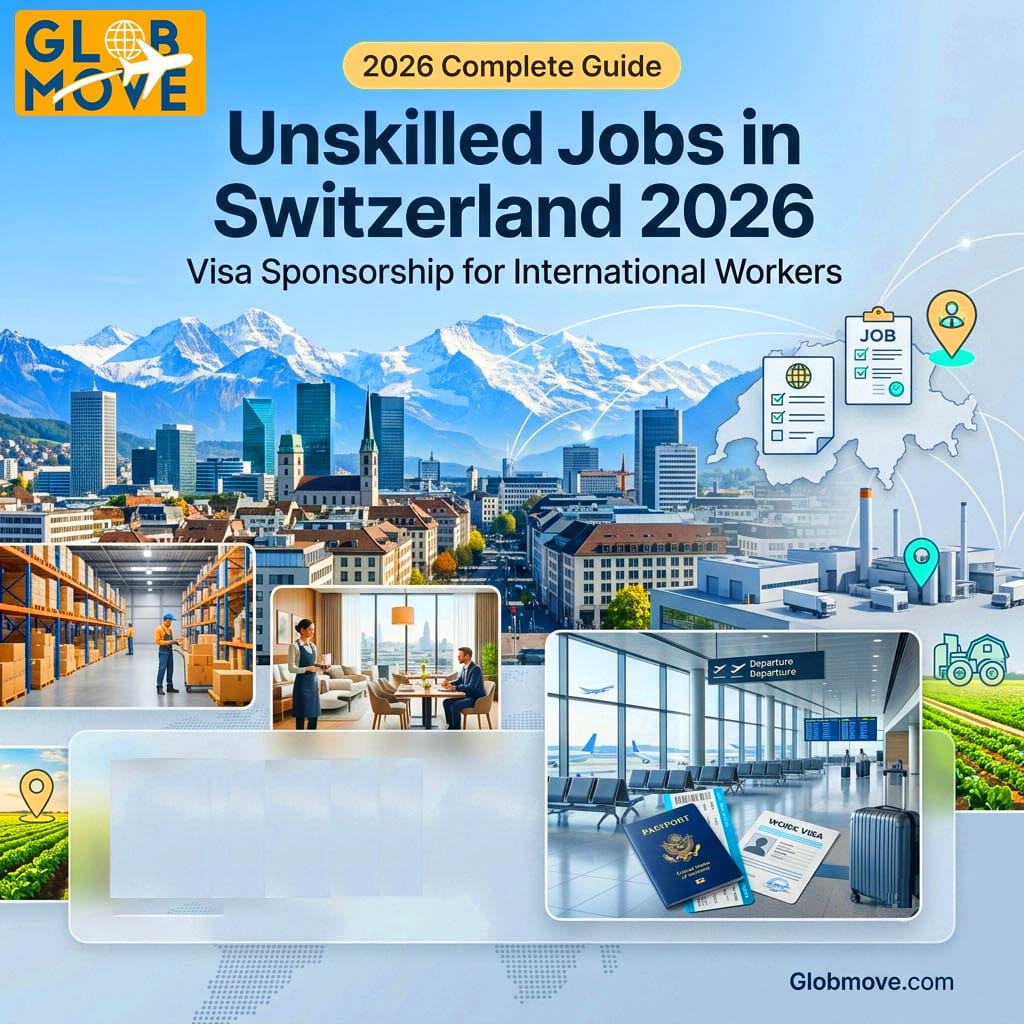
Legitimate Unskilled Jobs in Switzerland With Visa Sponsorship for International Workers (2026 Complete Guide)
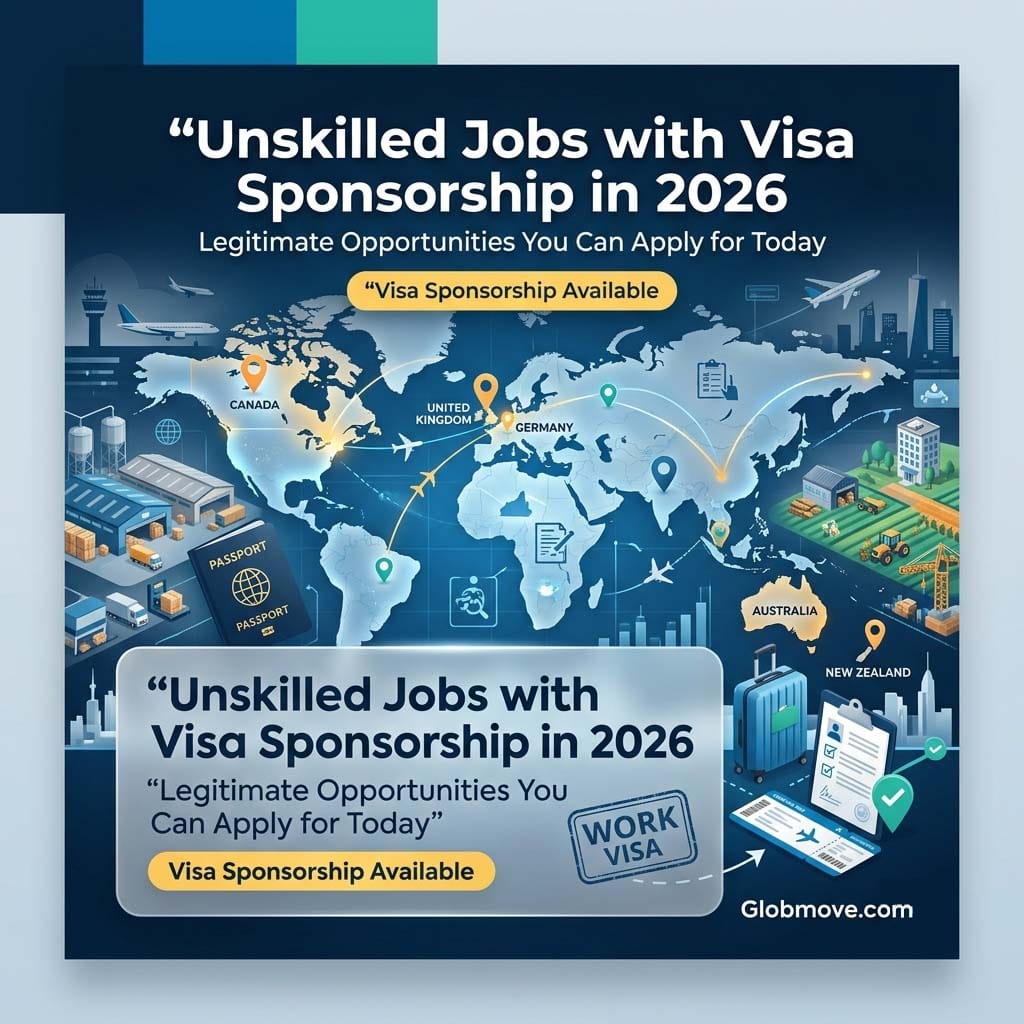
Switzerland is consistently ranked among the world’s best countries for salaries, quality of life, workplace safety, and economic stability. While many people associate the Swiss labor market with highly qualified professionals in banking, engineering, pharmaceuticals, and information technology, there are also legitimate opportunities for international workers seeking unskilled or low-skilled jobs with visa sponsorship.
However, there is also a great deal of misinformation online. Many websites claim that anyone can easily secure a Swiss work visa without qualifications or experience. In reality, Switzerland has one of Europe’s most regulated labor markets. Employers cannot simply hire workers from outside the EU or EFTA without meeting immigration requirements, and visa sponsorship is generally available only when employers can justify recruiting internationally.
That does not mean opportunities do not exist. Sectors such as hospitality, cleaning, logistics, agriculture, food production, construction support, manufacturing, and seasonal tourism regularly experience labor shortages. In some cases, employers recruit internationally when they cannot find enough local workers or when specialized seasonal demand increases.
This guide explains how unskilled jobs in Switzerland with visa sponsorship in 2026 actually work, where genuine opportunities exist, how to apply effectively, and the mistakes that prevent many international applicants from receiving interviews.
Why Switzerland Still Recruits International Workers
Switzerland’s economy relies on several industries that require a steady supply of workers throughout the year. Hotels welcome millions of visitors annually, manufacturers operate around the clock, logistics companies support domestic and international trade, and agricultural businesses depend on seasonal labor during planting and harvest periods.
Although Swiss employers generally prioritize local and European workers, recruitment from outside Europe may occur when there are genuine staffing shortages or when employers have difficulty filling vacancies.
This means international applicants should focus on industries that regularly experience recruitment challenges rather than applying randomly across every available vacancy.
Understanding this reality helps applicants spend their time more efficiently and increases the likelihood of finding employers willing to sponsor foreign workers.
What Does “Unskilled” Actually Mean?
Many people misunderstand the term unskilled job.
It does not mean that no skills are required.
Instead, these jobs usually do not require a university degree or advanced professional licensing. Employers still expect applicants to demonstrate reliability, physical fitness where necessary, communication skills, teamwork, and a willingness to learn.
Experience in similar work is often highly valued, even when formal education is not.
Applicants who understand this distinction generally prepare much stronger applications than those who assume these positions require little effort.
Industries That Commonly Recruit International Workers
Although recruitment changes throughout the year, several sectors continue to offer opportunities for foreign workers.
Hospitality
Hotels, resorts, restaurants, and mountain lodges regularly recruit staff including:
- Hotel housekeepers
- Kitchen assistants
- Dishwashers
- Waiters and servers
- Food preparation assistants
- Laundry staff
- Hotel maintenance assistants
During peak tourism seasons, especially in ski resorts and major cities, employers may increase international recruitment.
Agriculture
Swiss farms periodically require workers for:
- Fruit picking
- Vegetable harvesting
- Greenhouse operations
- Dairy farm assistance
- Livestock support
- Packing agricultural products
Many of these roles are seasonal but can provide valuable international work experience.
Food Processing
Food manufacturing companies frequently recruit workers for:
- Packaging
- Production line operations
- Quality checking
- Warehouse preparation
- Cleaning production equipment
Factory environments generally provide structured training for new employees.
Warehousing and Logistics
The rapid growth of online commerce has increased demand for:
- Warehouse operatives
- Order pickers
- Packaging staff
- Logistics assistants
- Distribution workers
Physical fitness and attention to detail are often more important than formal education.
Cleaning Services
Commercial cleaning remains one of the largest employment sectors for international workers.
Common positions include:
- Office cleaners
- Hotel cleaners
- Hospital cleaning assistants
- Industrial cleaning staff
- Residential cleaning teams
Many employers provide on-the-job training.
Manufacturing
Swiss manufacturers occasionally recruit:
- Assembly workers
- Packaging operators
- Factory laborers
- Production assistants
Previous manufacturing experience can significantly strengthen applications.
Can Employers Really Sponsor Foreign Workers?
Yes—but not every employer does.
Swiss employers willing to sponsor work permits usually recruit because:
- They cannot fill vacancies locally.
- Seasonal demand increases.
- Specialized experience is difficult to find.
- Long-term staff shortages exist.
Applicants should therefore search specifically for vacancies mentioning:
- Visa sponsorship
- International recruitment
- Relocation assistance
- Work permit support
Applying blindly to thousands of vacancies without reading job descriptions rarely produces good results.
How to Improve Your Chances of Getting Hired
Many applicants submit hundreds of applications yet receive almost no responses.
The problem is often not nationality but application quality.
Strong applicants usually:
- Tailor each CV to the vacancy.
- Mention relevant experience first.
- Explain availability for relocation.
- Use clear professional English.
- Highlight language skills honestly.
- Demonstrate long-term commitment.
Even six months of cleaning, warehouse, restaurant, farm, or factory experience can make an application considerably stronger.
Language Can Make a Huge Difference
One of the biggest reasons applicants fail is language.
Switzerland has four official languages:
- German
- French
- Italian
- Romansh
Although some international employers operate in English, many entry-level positions require at least basic communication in the local language.
Learning even A2 or B1 German or French can significantly improve employability.
Applicants who invest several months in language learning often become much more competitive than those relying only on English.
Common Mistakes That Lead to Rejection
Many international workers unknowingly weaken their applications by making avoidable mistakes.
Some of the most common include:
- Sending the same CV to every employer.
- Applying for jobs requiring qualifications they do not possess.
- Ignoring language requirements.
- Applying through unofficial websites.
- Paying recruitment agents who promise guaranteed visas.
- Using outdated CV formats.
- Applying only to highly competitive cities while ignoring smaller regions.
Employers quickly recognize generic applications.
Taking time to customize your documents almost always produces better results.
Protect Yourself From Recruitment Scams
Unfortunately, Switzerland’s strong international reputation attracts scammers.
Be cautious if someone:
- Guarantees a visa before an interview.
- Requests payment for a job offer.
- Promises immediate work permits.
- Uses unofficial email addresses.
- Refuses to conduct interviews.
Asks for passport copies before any recruitment process.
Legitimate employers recruit through established hiring procedures.
Never pay someone simply because they promise a Swiss job.
Building a Competitive CV
Even for unskilled positions, your CV matters.
Focus on:
- Reliable employment history.
- Practical work experience.
- Physical work capability.
- Teamwork examples.
- Customer service skills.
- Languages spoken.
- Availability to relocate.
- Relevant certifications such as food safety or forklift operation if applicable.
A simple, well-organized CV often performs better than a long document filled with unnecessary information.
You may also find this guide helpful: How to build a strong CV for scholarships fellowships and international jobs
Where to Find Legitimate Swiss Jobs
Instead of relying on social media advertisements, use trusted recruitment platforms.
Some of the best sources include:
- swiss (Swiss Public Employment Service)
Jobs.ch
- ch
- EURES
- Adecco Switzerland
- Randstad Switzerland
These platforms regularly publish verified vacancies from legitimate employers.
Planning Beyond Your First Job
Many people focus entirely on obtaining their first overseas job.
A better strategy is thinking about what comes afterward.
Ask yourself:
- Will this employer offer career progression?
- Can I improve my language skills while working?
- Does this experience strengthen my future applications?
- Can I transition into more skilled roles later?
Many international workers begin in entry-level positions before progressing into supervisory, technical, or administrative careers.
Long-term planning often leads to better outcomes than chasing the highest starting salary.
Related Guides You May Find Helpful
If you’re exploring work opportunities across Europe, these Globmove guides can help expand your search:
- Work in Switzerland with visa sponsorship 2026/
- Global jobs with visa sponsorship work in Luxembourg 2026
- Official way of finding european jobs for foreigners foreigners/
These resources explain broader visa sponsorship strategies and reputable job platforms across Europe.
Final Thoughts
Working in Switzerland remains an attractive goal for many international job seekers thanks to competitive salaries, excellent working conditions, and a high standard of living. While obtaining unskilled jobs in Switzerland with visa sponsorship is not as simple as some online sources suggest, genuine opportunities do exist in sectors experiencing ongoing labor demand.
Success depends on approaching the process strategically. Focus on legitimate employers, prepare a professional CV, build relevant work experience where possible, improve your language skills, and apply only for positions that realistically match your profile. Most importantly, avoid recruitment scams and rely on trusted job platforms and official guidance.
Applicants who treat the process as a long-term career plan rather than a quick route abroad are often the ones who ultimately secure rewarding opportunities in Switzerland.